

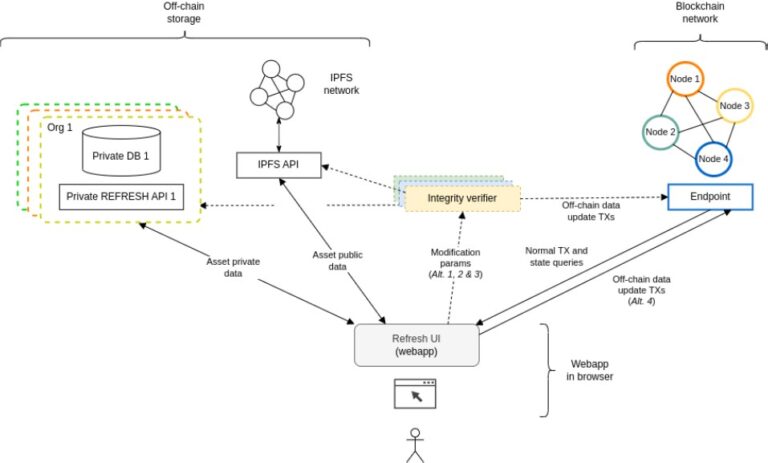
Architecture of the traceability tool.
The REFRESH project introduces a pioneering system that leverages blockchain technology to ensure transparent, secure, and trustworthy tracking of wind turbine blades throughout their end-of-life (EoL) and recycling options.
This innovative approach aims to revolutionise the management of EoL blades, promoting sustainability and circular economy principles within the renewable energy sector.
The system combines a decentralised blockchain network with advanced privacy-preserving tools, enabling stakeholders such as wind farm operators, decommissioners, recyclers, and waste managers to reliably share and verify data without compromising sensitive information. By incorporating features like off-chain storage and content hash verification, the solution balances transparency with confidentiality.
The platform manages a broad array of assets associated with wind blades and their recycled materials. It encompasses detailed tracking of blades themselves, the various components they comprise, and their extracted materials – ranging from blades, components, and blades’ composite materials to secondary recycled materials used in manufacturing new products. To optimise scalability and data security, the system employs off-chain storage solutions like IPFS for public data and secure databases for private information, with data integrity verified via blockchain content hashes.
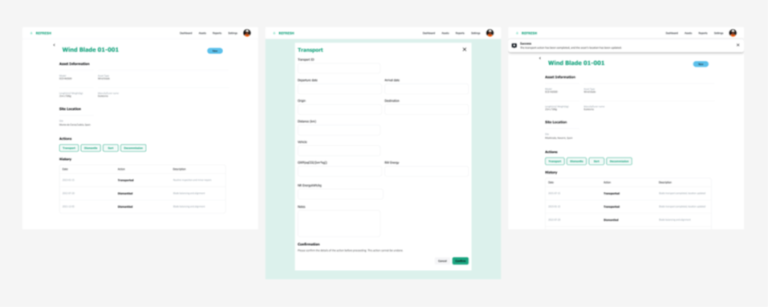
User interface for the decision-making tool.
Complementing the traceability framework is a smart Decision-Making Tool that assists stakeholders in selecting the optimal recycling pathway. This privacy-aware tool utilises cutting-edge cryptographic techniques, including proxy re-encryption and self-sovereign identity, to evaluate environmental impacts like carbon footprints without revealing individual inputs.
“Our integrated solution enhances trust and accountability in the sustainable management of wind turbine blades. By combining transparency with privacy, we enable stakeholders to make informed decisions that align with environmental goals and regulatory compliance.”
David García-Estévez, Project Manager at TECNALIA
Functional versions of both tools will be available at the end of 2025 and fully validated by industrial partners in 2026.
In parallel with other technological developments, this task underscores a significant step forward in ensuring the responsible EOL management of renewable energy infrastructure, supporting the industry’s commitment to sustainability and circular economy practices.
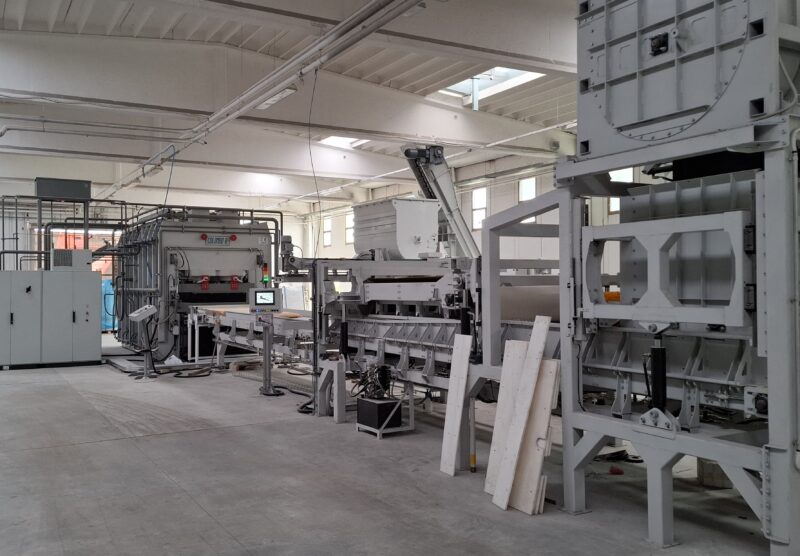
REFRESH participates in WindEnergy Hamburg as member of Wind Innovation Cluster Hub
REFRESH at WindEnergy Hamburg 2026